The Crucifixion of the Master of Jean Rolin II: Reconstructing a Fifteenth-Century Masterpiece
The survival of a detached manuscript leaf is often a story of both loss and preservation. Once removed from its parent manuscript, an illuminated leaf can begin an entirely new existence. It may pass through the hands of collectors, connoisseurs, dealers and scholars, crossing borders and generations while the circumstances of its original separation—and sometimes even the identity of the manuscript from which it came—fade from memory.
Along the way, it can acquire new histories and new custodians while retaining the qualities for which it was first created: its aesthetic power, its spiritual meaning, its historical importance and, inevitably, its material value.
Occasionally, however, the evidence preserved within the fragment allows us to reverse that process of dispersal. Borders, dimensions, heraldry, iconography and related surviving leaves can lead us back toward the manuscript from which it was separated. Such is the case with this monumental Crucifixion, painted around 1450–1460 by the Master of Jean Rolin II for Cardinal Jean Rolin, bishop of Autun.
The miniature has traveled far from its original setting. By the nineteenth century, it was associated with the Boston collector Martin Brimmer and subsequently passed through another important Boston collection before appearing on the international art market. Yet remarkably, several of its closest companions remained in Autun.
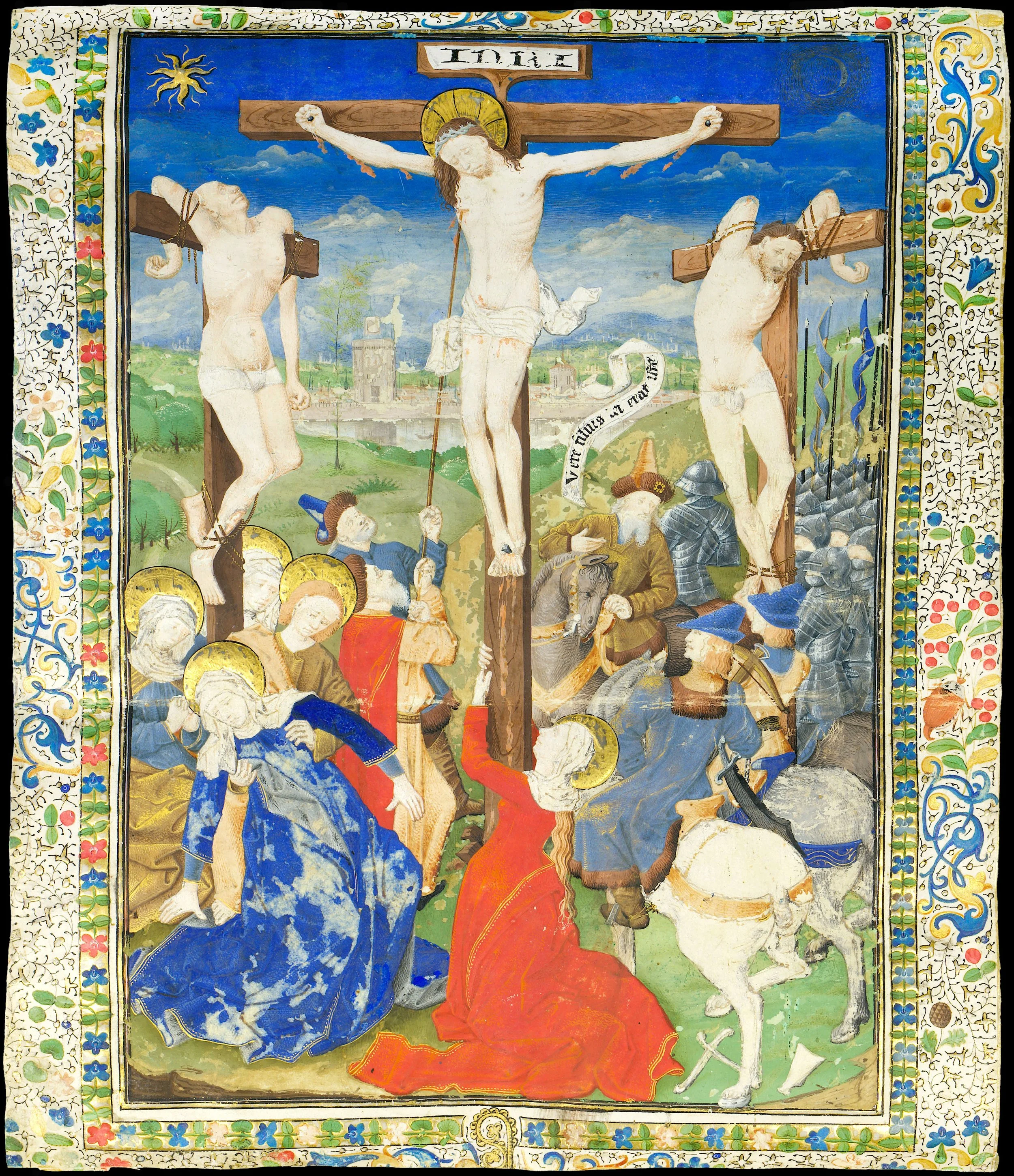
Crucifixion by the Master of Jean Rolin II, from a Missal made for Cardinal Jean Rolin, Paris, perhaps Autun, France, c. 1450–1460, dimensions: 274 × 233 mm.
The Crucifixion of the Master of Jean Rolin II
The leaf is monumental: a nearly full-page Crucifixion painted in Paris around 1450–1460 by the Master of Jean Rolin II. It was created for a Missal commissioned by Cardinal Jean Rolin (1408–1483), bishop of Autun and one of the great ecclesiastical patrons of fifteenth-century France. The anonymous illuminator takes his modern name from the remarkable group of manuscripts he painted for the Cardinal.
A Missal contained the texts necessary for the celebration of the Mass, and its most lavish illumination was often reserved for the opening of the Canon. Here the Crucifixion would originally have formed one half of a magnificent facing pair, opposite a depiction of God the Father surrounded by the symbols of the Four Evangelists. Together, these two monumental miniatures formed the visual climax of the manuscript, far surpassing in scale and splendour the smaller illuminations found elsewhere in the volume.
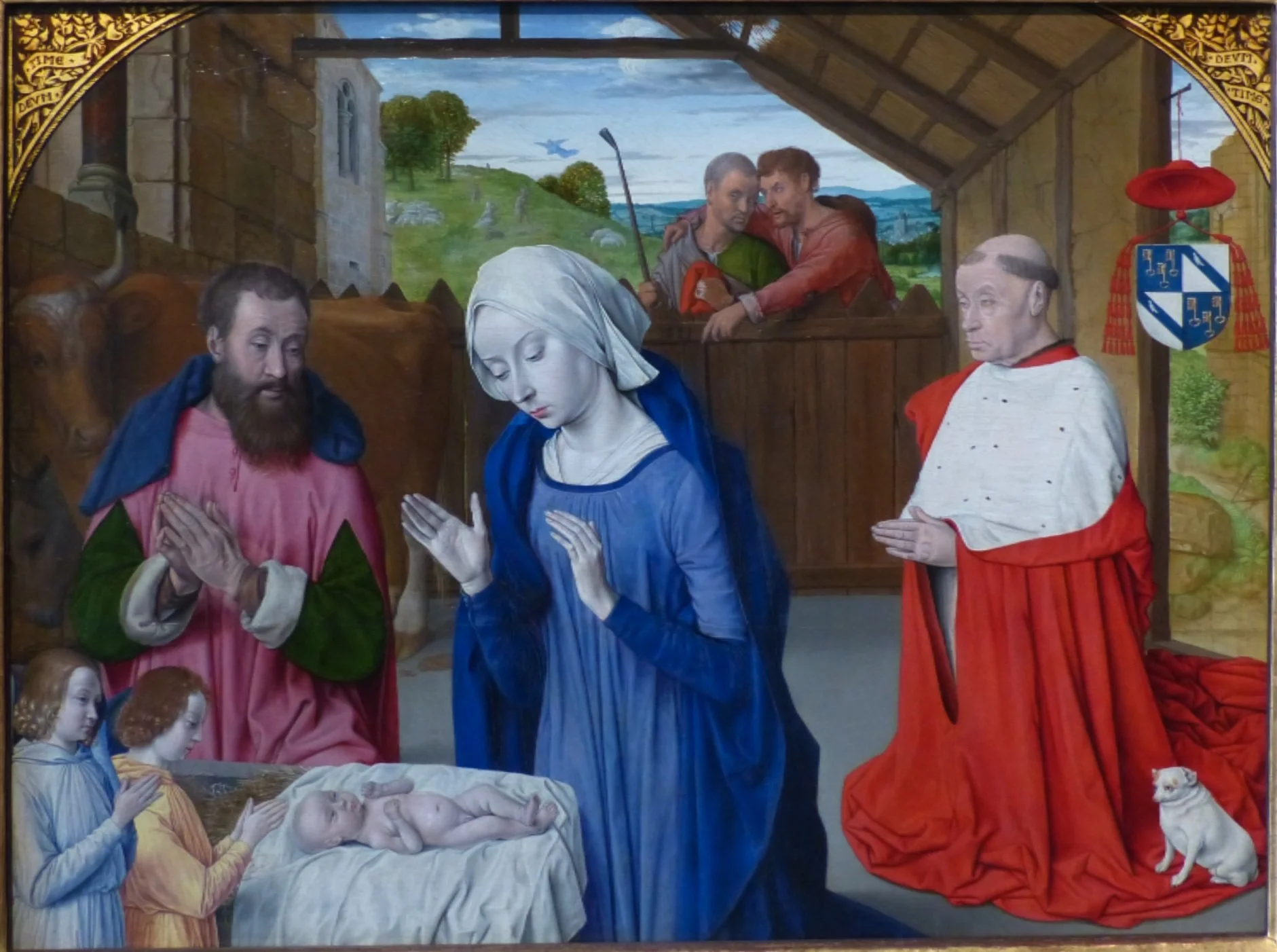
Jean Hey, Nativity with Cardinal Jean Rolin kneeling in prayer, c. 1480, Musée Rolin, Autun
The Great Patron
Jean Rolin was among the great ecclesiastical patrons of fifteenth-century France. The son of Nicolas Rolin, powerful chancellor to Philip the Good, Duke of Burgundy, he became bishop of Autun and was elevated to cardinal in 1448. Like his father, whose commissions included Rogier van der Weyden’s celebrated Last Judgement for the Hôtel-Dieu at Beaune, Jean Rolin employed some of the finest artists available to him.
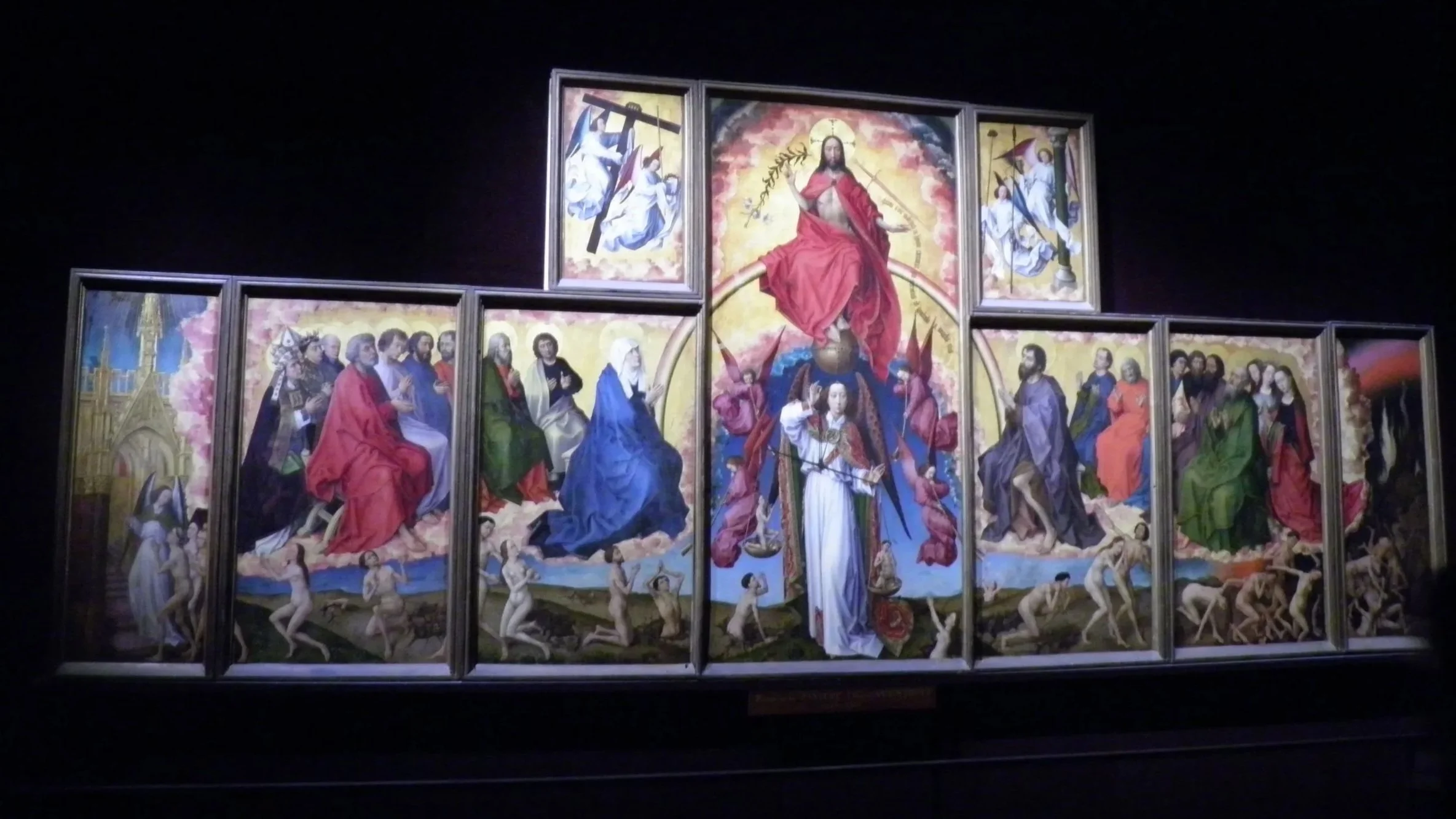
Rogier van der Weyden, The Last Judgement (Beaune Altarpiece), c. 1443–1451. Hôtel-Dieu, Beaune, France. Commissioned by Nicolas Rolin.
Like his father, Jean Rolin used art and architecture as expressions of devotion, status and institutional identity. His patronage left a particularly visible mark on Autun. He sponsored important work at the cathedral of Saint-Lazare, including its soaring Gothic spire and other architectural transformations. Late in his life, he was portrayed kneeling in prayer in the remarkable Nativity by Jean Hey, the Master of Moulins, now in the Musée Rolin at Autun. Illuminated manuscripts formed an especially important part of this wider program of patronage. Rolin commissioned lavish liturgical books marked repeatedly with his arms, devices and motto, Time Deum (“Fear God”), transforming books made for the celebration of the Mass into objects that proclaimed both his ecclesiastical office and personal identity.
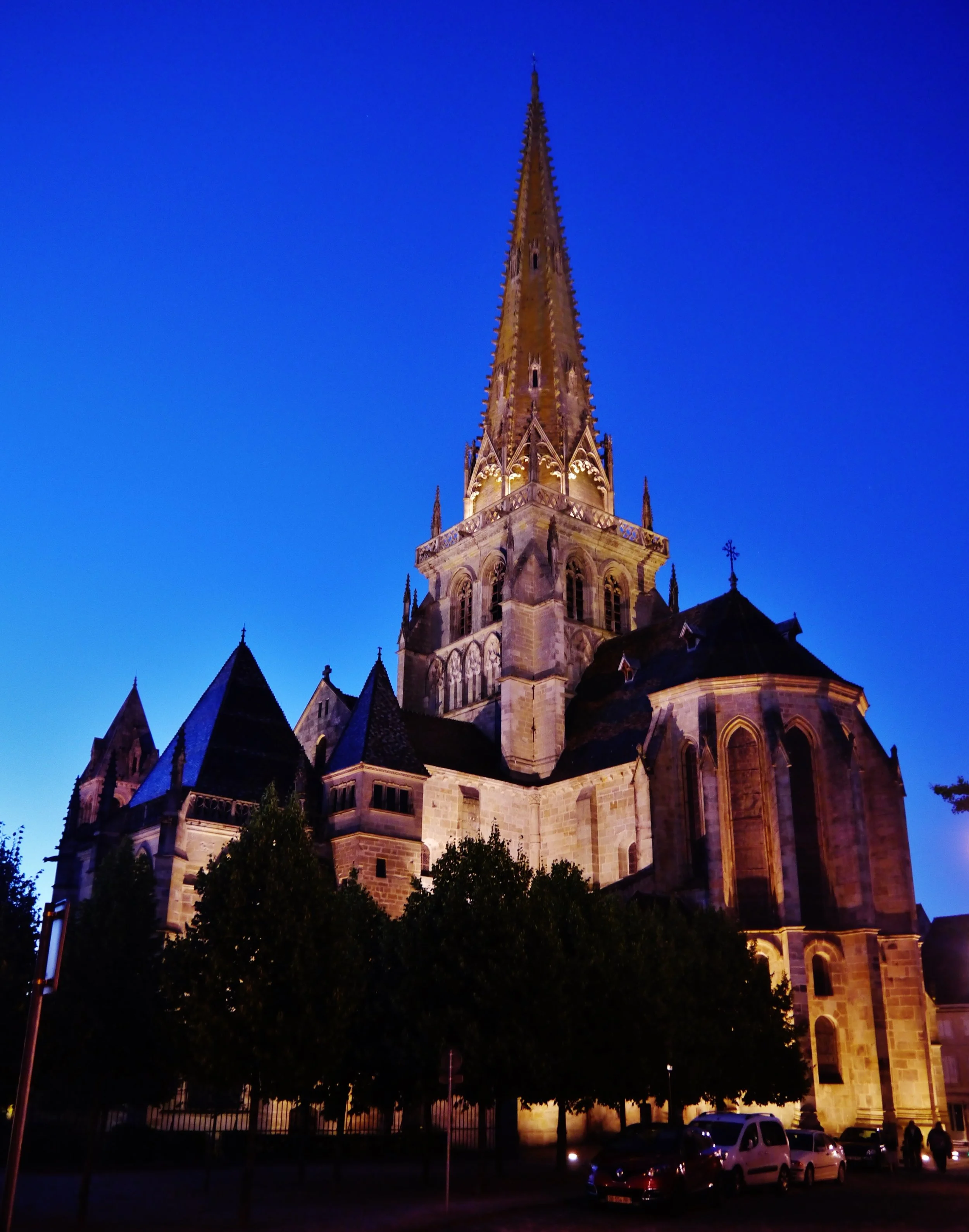
Cathedral of Saint-Lazare, Autun. Following a fire in 1468, Cardinal Jean Rolin sponsored an extensive campaign of rebuilding, including the erection of the cathedral’s soaring Gothic spire.
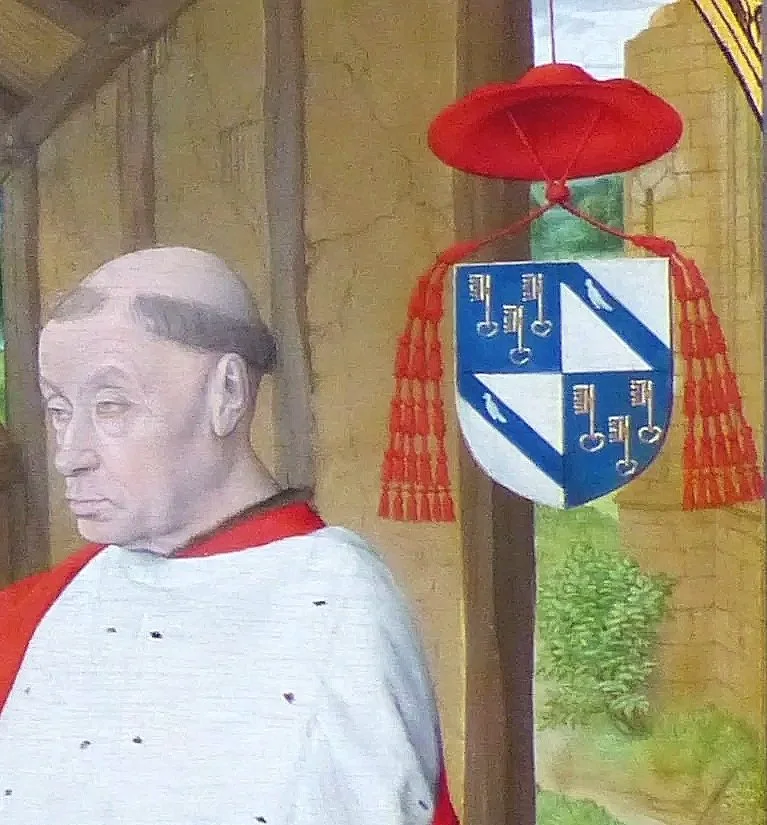
Jean Hey, detail of the Nativity with Cardinal Jean Rolin, c. 1480, showing Jean Rolin kneeling in prayer beside his arms surmounted by the cardinal’s hat. Musée Rolin, Autun.
The Rolin Missals
Cardinal Jean Rolin commissioned a remarkable series of lavishly illuminated Missals. Three remain today in the Bibliothèque municipale d’Autun—MSS 108A (S.131), 110 (S.133), and 114A (S.136)—while a fourth, Lyon, Bibliothèque municipale, MS 517. Their extensive illumination by the same artist established the anonymous painter’s modern name: the Master of Jean Rolin II, active in Paris from approximately 1445—1465. Of these, the Lyon Missal is perhaps the best known. Produced around 1450–1455, it preserves an extraordinary sequence of illumination and provides an important point of comparison for the Master’s style.
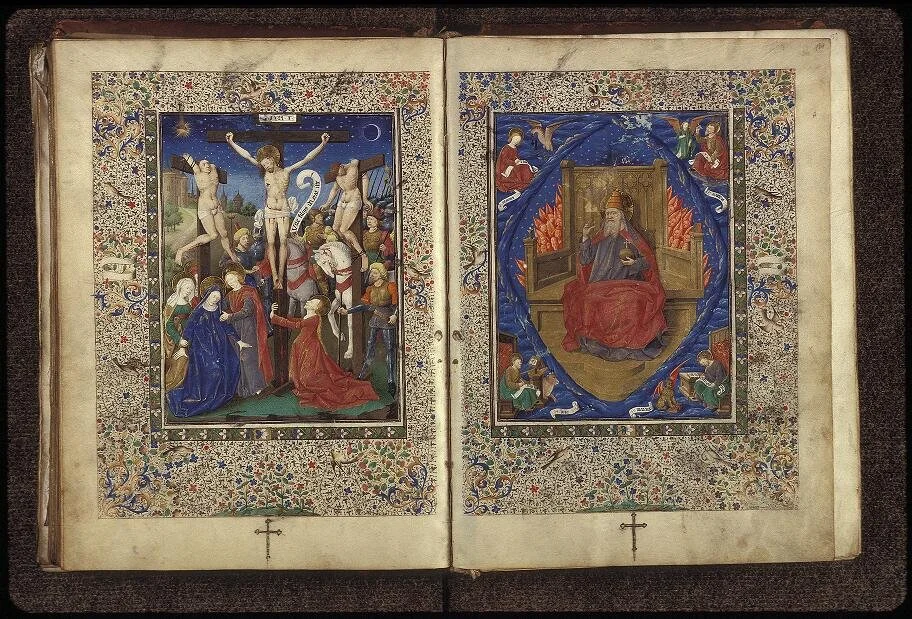
Master of Jean Rolin II, Canon opening with the Crucifixion and God the Father, from the Missal of Cardinal Jean Rolin, Paris, c. 1450–1455. Lyon, Bibliothèque municipale, MS 517, fols. 183v–184r.
The three Autun Missals have not survived intact, and all suffered substantial losses to their illumination, although not all to the same extent. MS 108A is now particularly fragmentary in its illumination, with only a single major miniature—the Pentecost—remaining in the volume. MS 110 is more securely anchored historically: a contemporary note written by Guilemete, Cardinal Rolin’s secretary, records Rolin’s donation of the manuscript to the chapel of the Virgin in Autun Cathedral in 1462. MS 110 suffered a different form of mutilation, with a number of its miniatures cut directly from the surviving folios rather than the leaves themselves being removed. MS 114A likewise suffered losses, although several smaller, quarter-page illuminations remain in place. Significantly, none of the three Rolin Missals now preserved at Autun retains its monumental Canon opening intact: in each, the Crucifixion and God the Father are absent.
Which Rolin Missal?
Identifying the manuscript from which the present Crucifixion was removed has long been debated. In 1924, Victor Leroquais associated a group of detached Rolin leaves preserved in the Album Bulliot of the Société Éduenne at Autun with MS 108A (S.131) in his monumental study Les sacramentaires et les missels manuscrits des bibliothèques publiques de France. The Album Bulliot is a composite collection of manuscript fragments, among which are three leaves associated with Cardinal Jean Rolin: God the Father (no. 1), Saint Andrew (no. 2), and the Adoration of the Magi (no. 3).
In 1993, François Avril developed this reconstruction considerably further. In Les manuscrits à peintures en France, 1440–1520, he attributed the monumental God the Father preserved in the Album Bulliot to MS 108A, together with the detached Saint Andrew and Adoration of the Magi. Crucially, he identified the present Crucifixion—citing its appearances at Sotheby’s in 1982 and 1991—as “the other leaf of the Canon,” thereby reconstructing it as the original pendant to the Album Bulliot God the Father.
Peter Rolfe Monks subsequently proposed a different solution. In 1997, he published a monumental God the Father in the Musée des Beaux-Arts de Lyon (inv. D 471) as an important work by the Master of Jean Rolin II. Two years later, he argued that the Lyon miniature and the present Crucifixion had originally faced one another at the opening of the Canon in MS 110 (S.133). Monks set out this reconstruction in his 1999 article, The Diptych by the Rolin Master Detached from Autun, Bibliothèque municipale, MS. 110 (S.133).
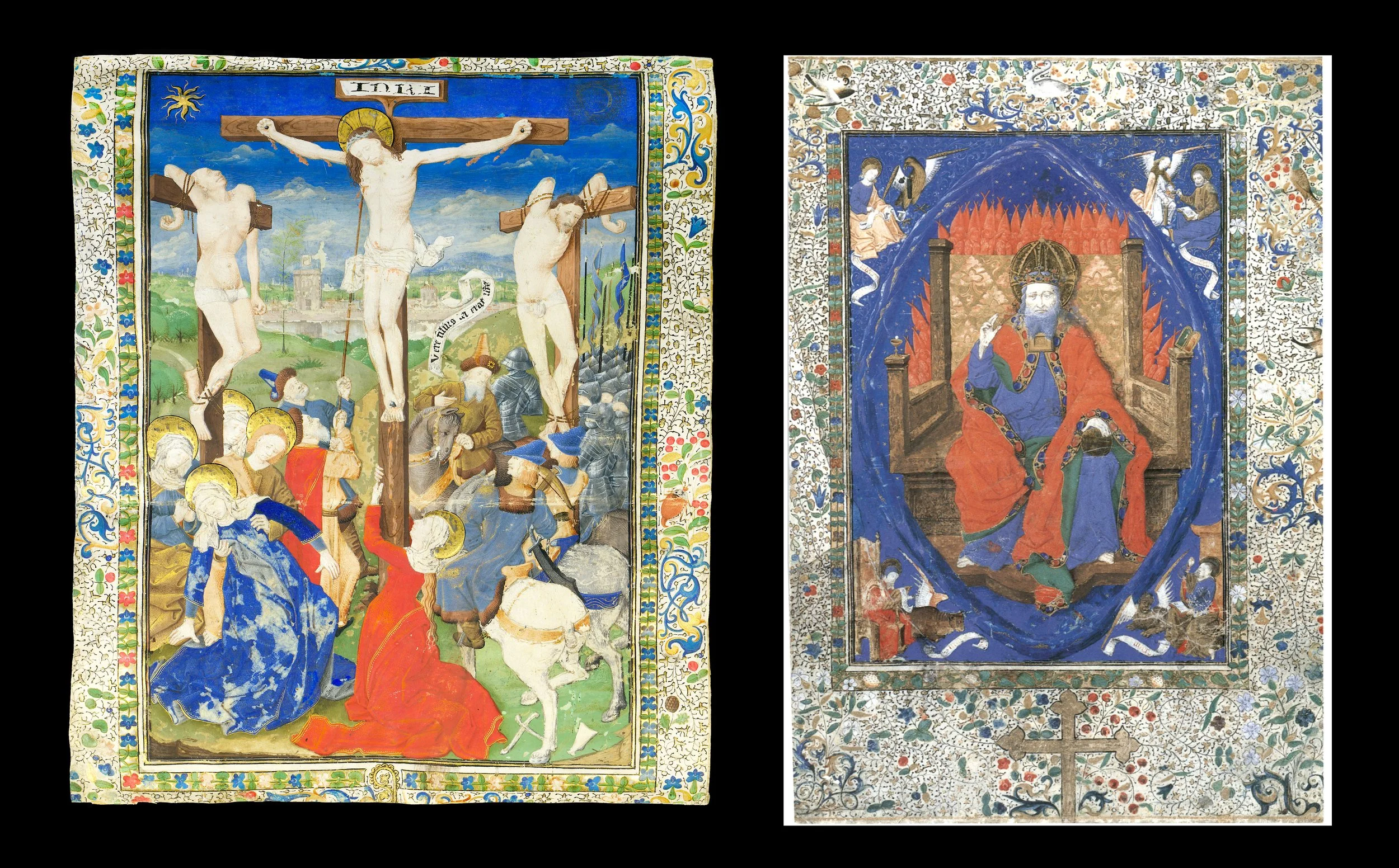
The present Crucifixion and God the Father by the Master of Jean Rolin II, Musée des Beaux-Arts de Lyon, inv. D 471, shown together according to the reconstruction of the Canon diptych proposed by Peter Rolfe Monks.
Monks’s reconstruction brought together two monumental works from the Rolin group. Yet when the leaves are placed side-by-side, differences in their dimensions, proportions and decorative structure become apparent. This brings us back to the other monumental God the Father preserved in Autun.
Reuniting the Canon Diptych
Preserved in the Album Bulliot of the Société Éduenne is the God the Father, attributed by Avril and Leroquais to MS 108A. When this miniature is placed beside the present Crucifixion, the relationship between the two is immediately striking. Their proportions are closely compatible, and their painting and overall decorative conception strongly suggest that the two leaves were conceived together.
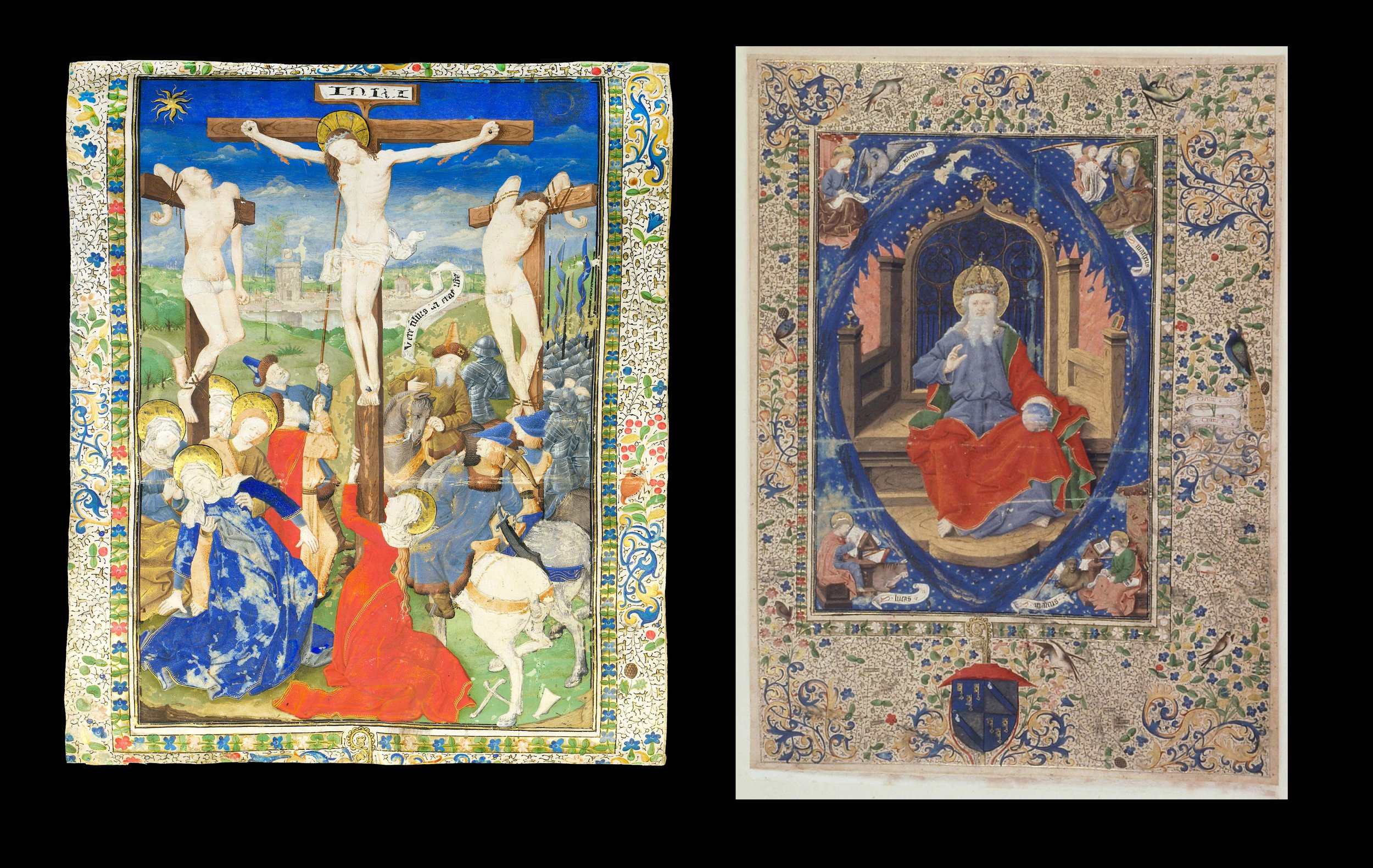
The present Crucifixion and God the Father by the Master of Jean Rolin II, Autun, Société Éduenne, Album Bulliot, no. 1, digitally reunited as the proposed original Canon diptych from Autun MS 108A (S.131).
One detail provides an especially compelling visual link. At the bottom of the Crucifixion, part of a bishop’s crozier survives within the border. A corresponding crozier appears prominently in the border of the Album Bulliot God the Father. Particularly appropriate to Jean Rolin in his role as bishop of Autun, the device appears across the two leaves as part of a closely related decorative conception.

Comparison of the bishop’s crozier in the borders of the Crucifixion and Album Bulliot God the Father
The relationship extends beyond this single motif. The gilded rinceaux, acanthus, fruit and naturalistic ornament of the borders are remarkably close (different the Lyon God the Father miniature). Avril himself observed the close relationship between their palette and handling, and more recently noted to me that the Rolin fragments in the Album Bulliot share the same characteristic deterioration of the painted surface. Seen together, the evidence strongly supports his original reconstruction: the Crucifixion and the Album Bulliot God the Father formed the two halves of a single sumptuous Canon opening.
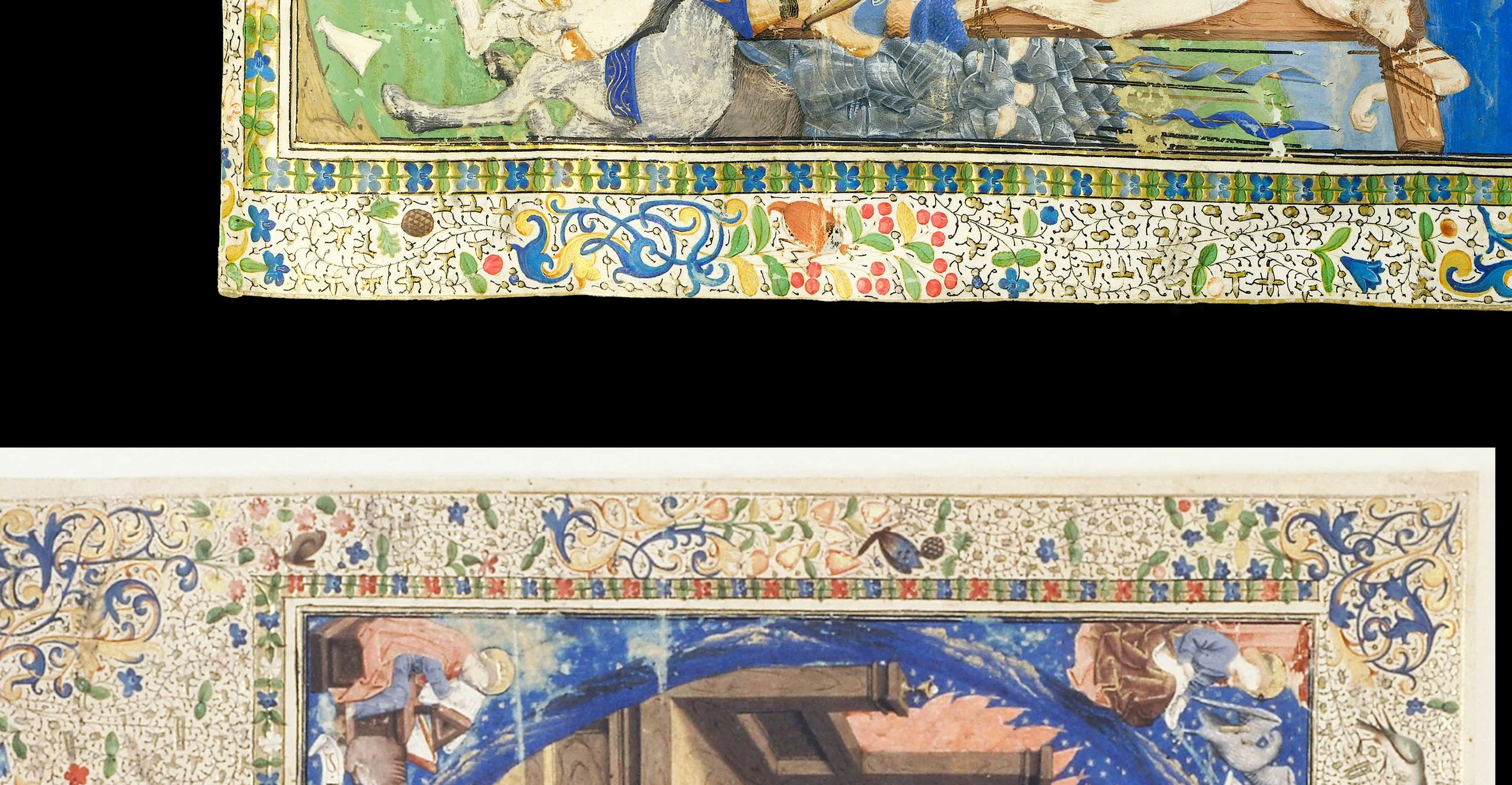
Border details from the present Crucifixion and the Album Bulliot God the Father, showing their closely related gilded rinceaux, acanthus, naturalistic ornament and decorative structure.
Returning the Crucifixion to MS 108A
Establishing the relationship between the two leaves is one question; determining precisely which Rolin Missal contained them is another.
Here the evidence leads back toward Autun MS 108A (S.131), as first proposed by Leroquais and developed more fully by Avril. The question is complicated by the exceptionally close relationship between MS 108A and MS 114A (S.136). As Avril himself observed, the two imposing manuscripts are almost twins in their decoration, produced within the same workshop, although he distinguished their paintings on stylistic grounds.
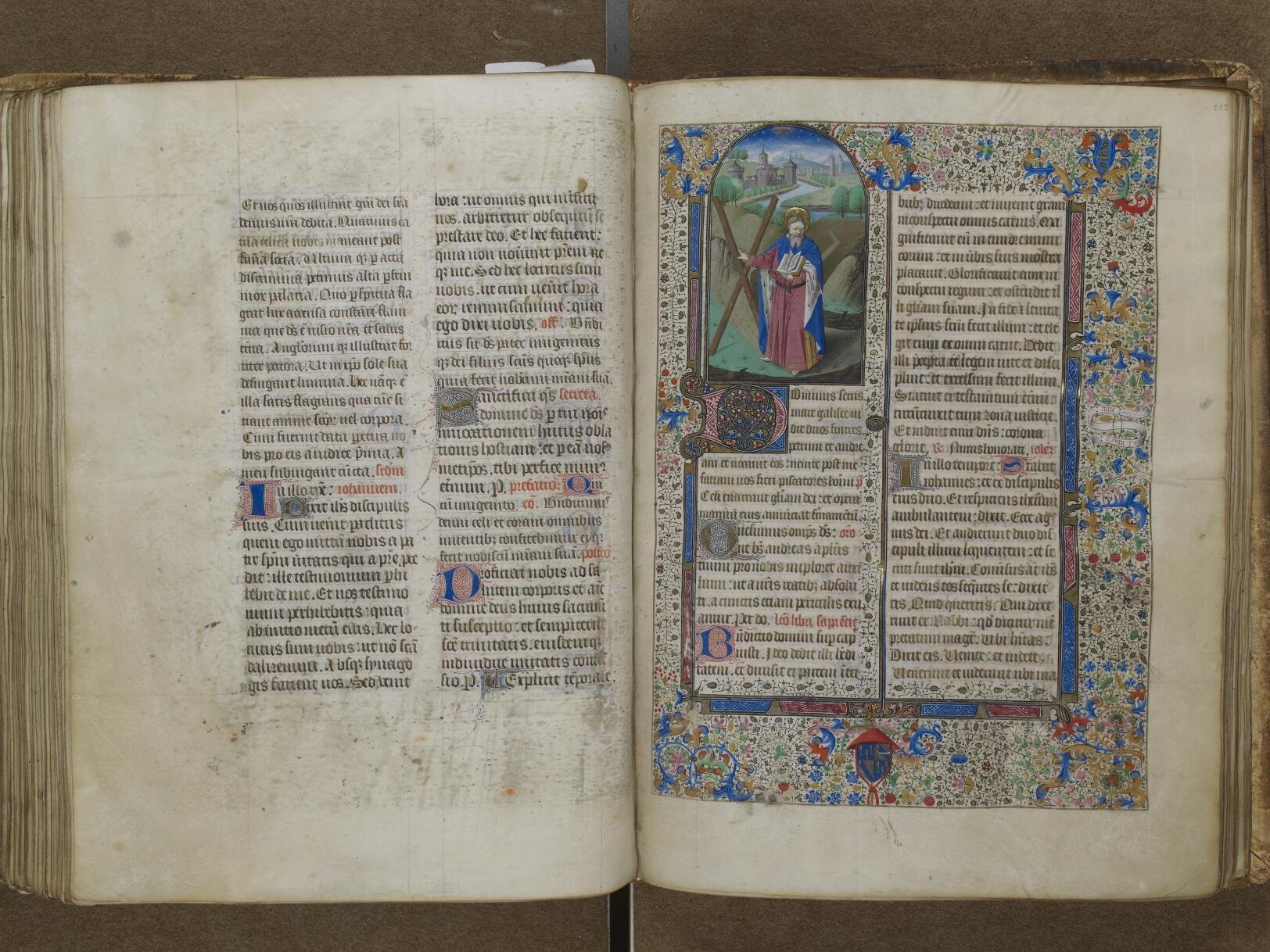
Master of Jean Rolin II, Saint Andrew, from the Missal of Cardinal Jean Rolin. Autun, Bibliothèque municipale, MS 114A (S.136), fol. 222
The surviving illumination provides an additional clue. MS 114A retains its miniature of Saint Andrew, while another Saint Andrew survives among the Rolin fragments in the Album Bulliot. The duplication effectively excludes MS 114A as the source of the Bulliot Saint Andrew and points instead toward MS 108A. Avril reached the same conclusion, assigning the Saint Andrew, Adoration of the Magi and God the Father to that manuscript.
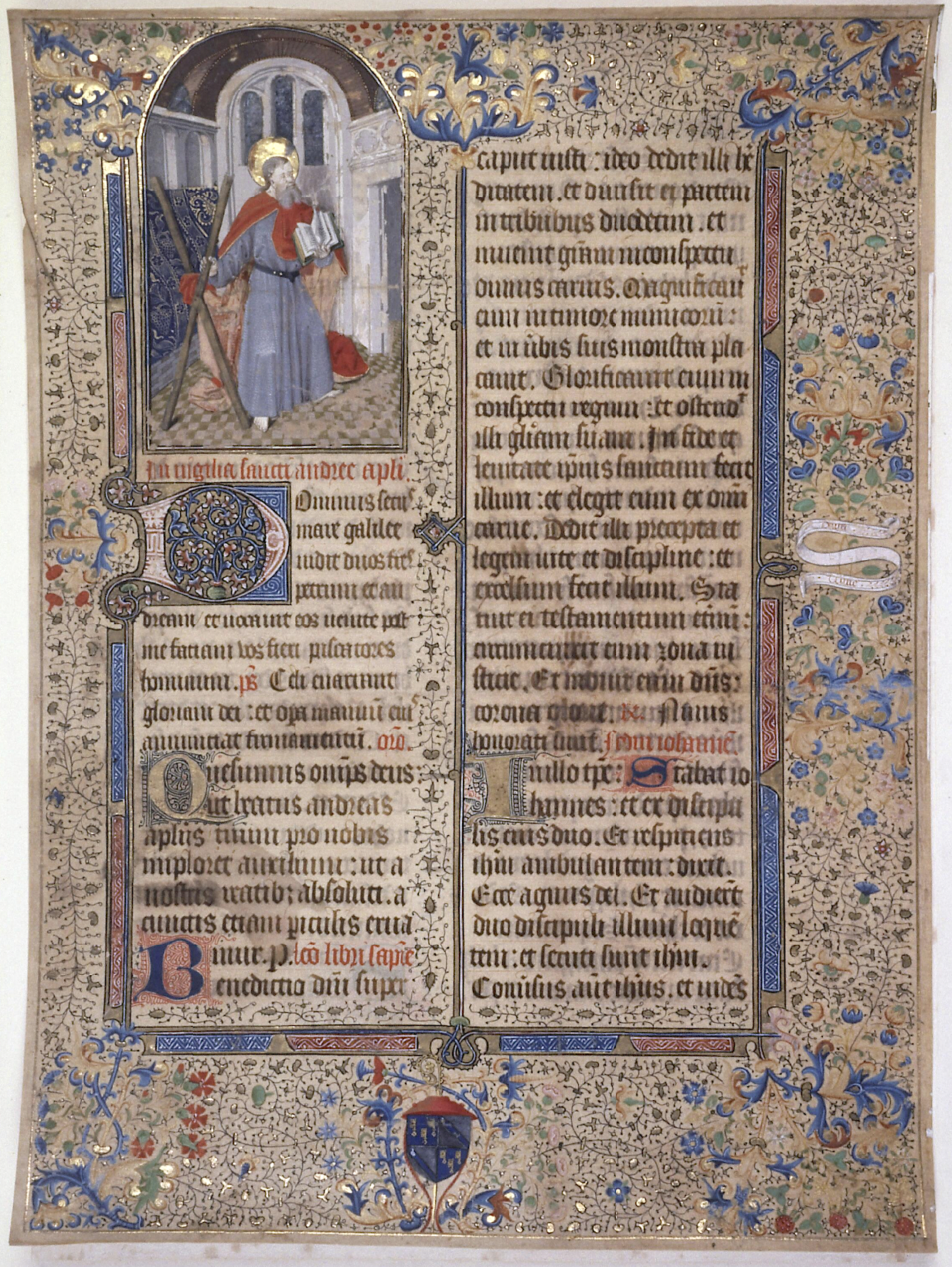
Master of Jean Rolin II, Saint Andrew, detached leaf from a Missal of Cardinal Jean Rolin, c. 1455. Autun, Société Éduenne, Album Bulliot, no. 2.
An important clue may survive among the Album Bulliot material. One incomplete illuminated leaf preserves its border and Cardinal Rolin’s arms, but has lost both its text and the large central illumination it once surrounded. An early French inscription records that the three associated leaves came from “un missel du quinzième siècle, que le cardinal de Rolin donna à la Cathédrale”—“a fifteenth-century Missal which Cardinal Rolin gave to the Cathedral.” The heraldic and decorative vocabulary of this surviving border corresponds particularly closely, I believe, with that of MS 110 and the Lyon Missal. The latter retains its Canon opening, whereas MS 110 does not. More significantly, MS 110 is specifically recorded as having been given by Cardinal Rolin to the chapel of the Virgin in Autun Cathedral in 1462.
If this incomplete leaf does indeed derive from MS 110, its missing central illumination becomes particularly intriguing. It may once have contained one of the monumental images from the lost Canon opening—either a Crucifixion or a God the Father—although too little survives to determine which.
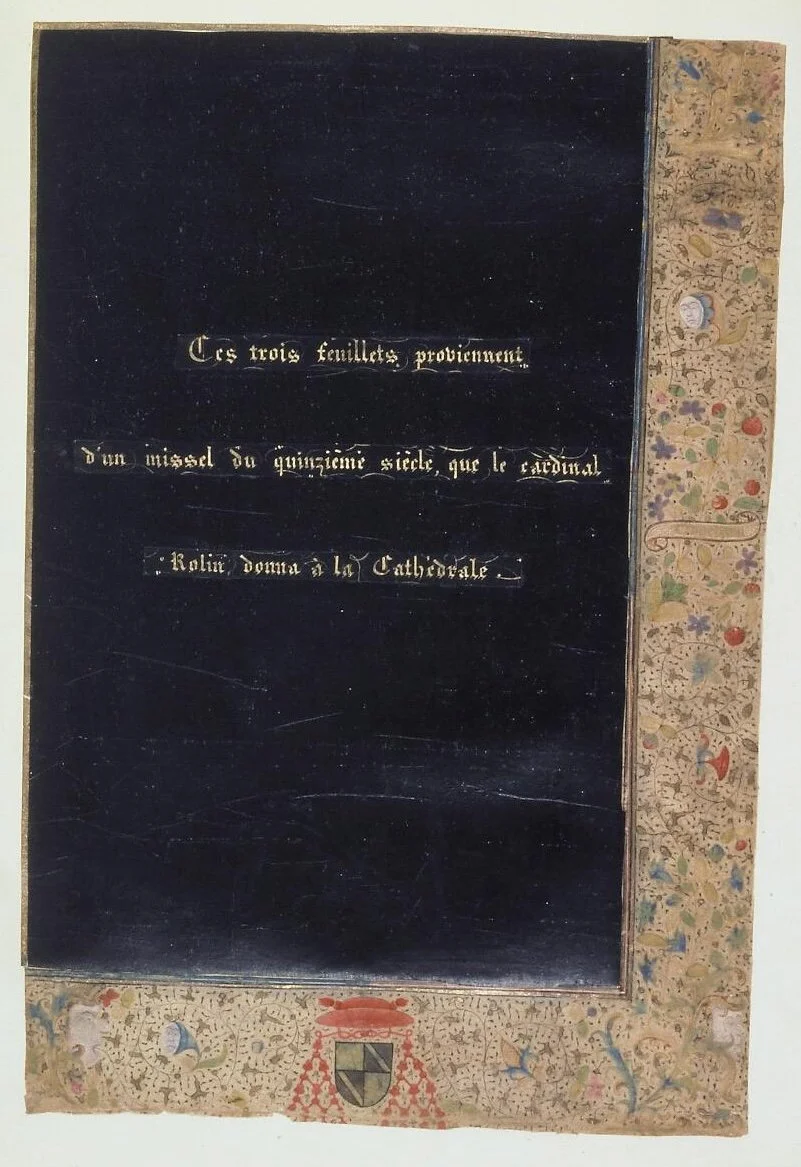
Historic Album Bulliot mount recording three illuminated leaves from a Missal of Cardinal Jean Rolin, and possibly one of the missing Canon paintings from 110 at Autun
This, in turn, raises another possibility. The monumental God the Father now in Lyon, which Monks paired with the present Crucifixion and assigned to MS 110, may instead derive from the missing Canon opening of MS 114A. The surviving fragments could therefore preserve traces of all three lost Autun Canon programmes: the present Crucifixion and Album Bulliot God the Father from MS 108A; the incomplete heraldic leaf, perhaps preserving evidence of one lost Canon miniature from MS 110; and the Lyon God the Father, potentially from MS 114A.
This further reconstruction remains provisional, but it raises the possibility that more of the three lost Canon openings survives than has previously been recognized. A systematic comparison of dimensions, border decoration, heraldic devices and the physical construction of these fragments with the three surviving Autun Missals may ultimately allow their original distribution to be reconstructed more precisely.
Dispersal and Provenance
Precisely when the present Crucifixion was removed from its manuscript remains uncertain. There is, however, important early evidence concerning the dispersal of the related Rolin material at Autun. In 1883, Marie Pellechet described the manuscript associated with these fragments as having been dépecé vers 1793—“dismantled around 1793.”
The significance of this statement requires some caution. It does not establish that the present Crucifixion was removed in 1793, nor does it exclude the possibility that individual leaves had already been separated from the manuscript before that date or were dispersed afterward. It does, however, preserve a nineteenth-century account placing the dismantling of the manuscript around the period of the French Revolution and provides an important chronological marker for the history of the dispersed Rolin material.
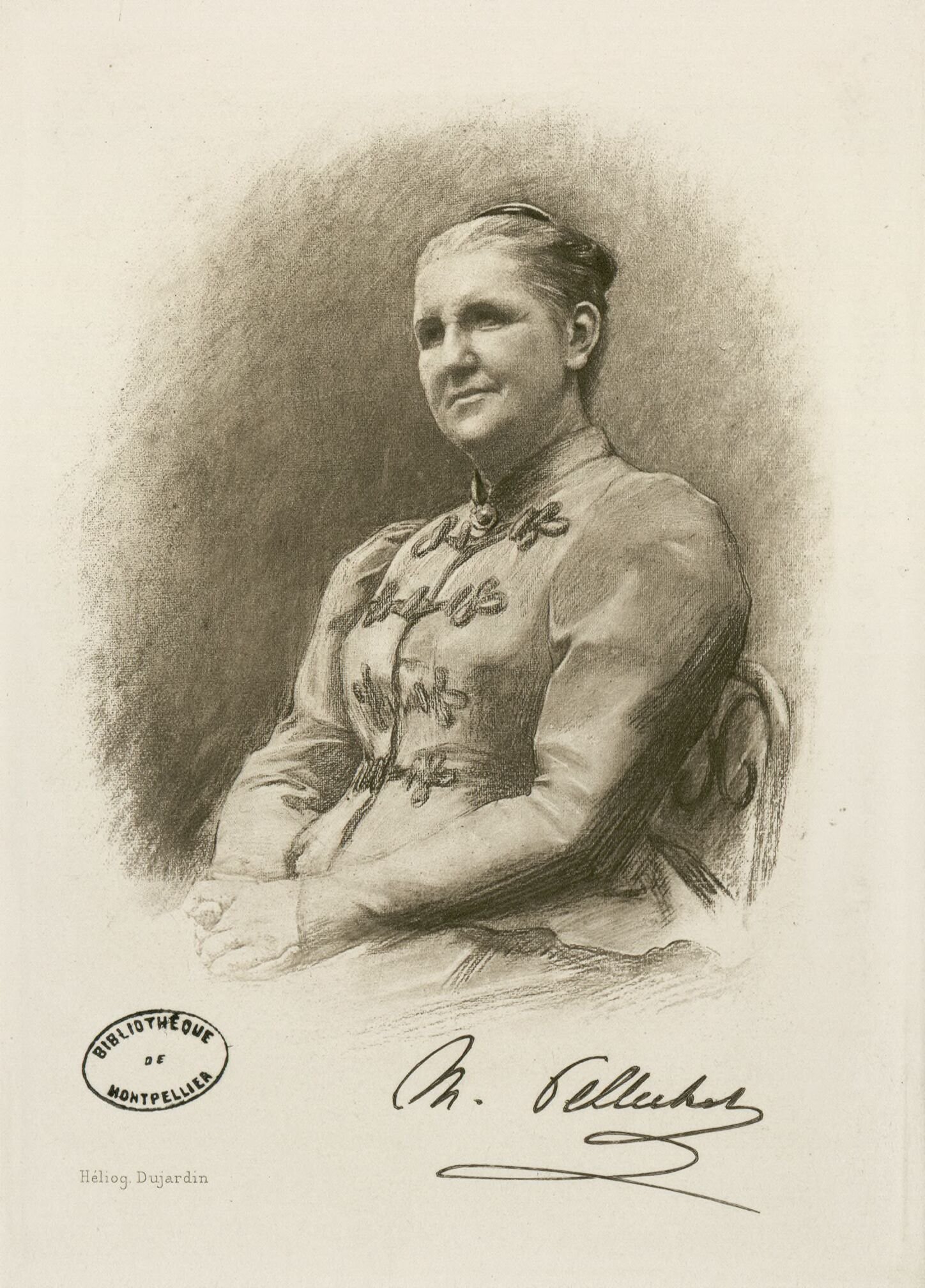
Portrait of Marie Pellechet, French bibliographer and manuscript scholar
The Album Bulliot inscription discussed above provides another early piece of evidence. It records: Ces trois feuillets proviennent d’un missel du quinzième siècle, que le cardinal de Rolin donna à la Cathédrale—“These three leaves come from a fifteenth-century Missal which Cardinal Rolin gave to the Cathedral.” Whatever the precise distribution of the surviving fragments among the Rolin manuscripts, the inscription preserves an early tradition connecting them with one of Cardinal Rolin’s Missals at Autun Cathedral. Taken together with Pellechet’s account, it provides valuable evidence for the history of the fragments before they entered modern collections.
By the later nineteenth century, the present Crucifixion had crossed the Atlantic and was associated with Martin Brimmer (1829–1896), the prominent Boston collector and first president of the Museum of Fine Arts, Boston. It subsequently entered the collection of Charles Henry Parker and was placed on long-term loan at the Museum of Fine Arts from 1929 to 1939.
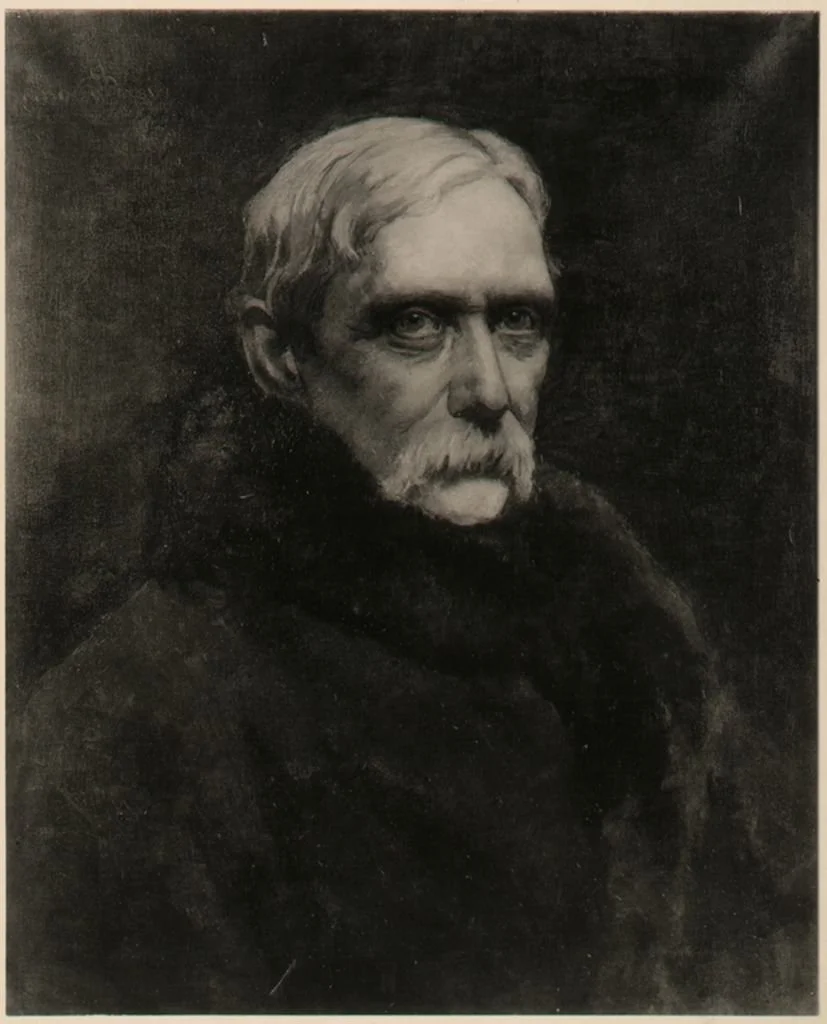
Sarah Wyman Whitman, Portrait of Martin Brimmer. Harvard University Portrait Collection, Harvard Art Museums, object no. H87. Bequest of Mrs. Sarah Whitman to Harvard College, 1904.
The leaf later returned to the international art market, appearing at Sotheby’s, London, on 22 June 1982 (lot 19), and again on 18 June 1991 (lot 21). Following the 1991 sale, it was acquired by Les Enluminures, which published it the following year in its first catalogue, Illuminations, Gouaches, Drawings from the 12th to the 17th Centuries (1992, no. 25), before it entered a private collection in the United States.
What happened between the early dispersal of the Rolin material and the appearance of the Crucifixion in Boston remains unknown. The leaf may have been separated before, during or after the revolutionary period; the surviving evidence does not yet allow that chronology to be established. While related fragments remained in Autun, the Crucifixion followed an independent path through private collections on the other side of the Atlantic. That separation—physical, geographical and scholarly—is precisely what has made reconstructing its original context so challenging.
Reconstructing a Lost Masterpiece
The reconstruction presented here builds upon more than a century of scholarship. Leroquais associated the dispersed Autun material with MS 108A, and in 1993 François Avril went further, identifying the present Crucifixion as the other leaf of the Canon opposite the God the Father in the Album Bulliot and assigning both to MS 108A. Monks later proposed a different reconstruction, pairing the Crucifixion instead with the God the Father now in Lyon and assigning the diptych to MS 110. The question is therefore a narrow but important one: which Missal, and which God the Father?
A reconsideration of the surviving evidence strongly supports Avril’s 1993 reconstruction. The dimensions, proportions, painting and borders of the present Crucifixion and the Album Bulliot God the Father strongly support their original pairing, reinforced by the striking correspondence of the bishop’s crozier across the two leaves. Their parent manuscript is more difficult to establish, particularly given the extraordinary similarity of the surviving Rolin Missals, but the cumulative evidence points most convincingly toward MS 108A.
More than two centuries after their dispersal, the two monumental leaves can therefore be brought together again, if only digitally. The Crucifixion can once more be placed beside its God the Father and returned, at least intellectually, to the pages of one of Cardinal Jean Rolin’s great illuminated Missals—and, I believe, to MS 108A. It is a privilege to play a small part in bringing together the work of the scholars who have studied these manuscripts over the past century, and in reconsidering their conclusions in light of the surviving leaves themselves. Much about the journey of these leaves remains unknown, but their survival—and the possibility of bringing them together again—allows one small part of a lost masterpiece to emerge from the obscurity of its dispersal.