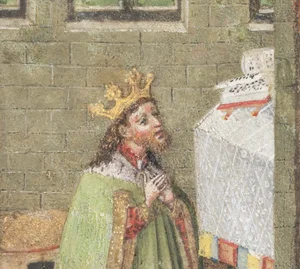
Manuscript Paintings, Illuminations, Miniatures, Leaves and Cuttings: Why Language Matters
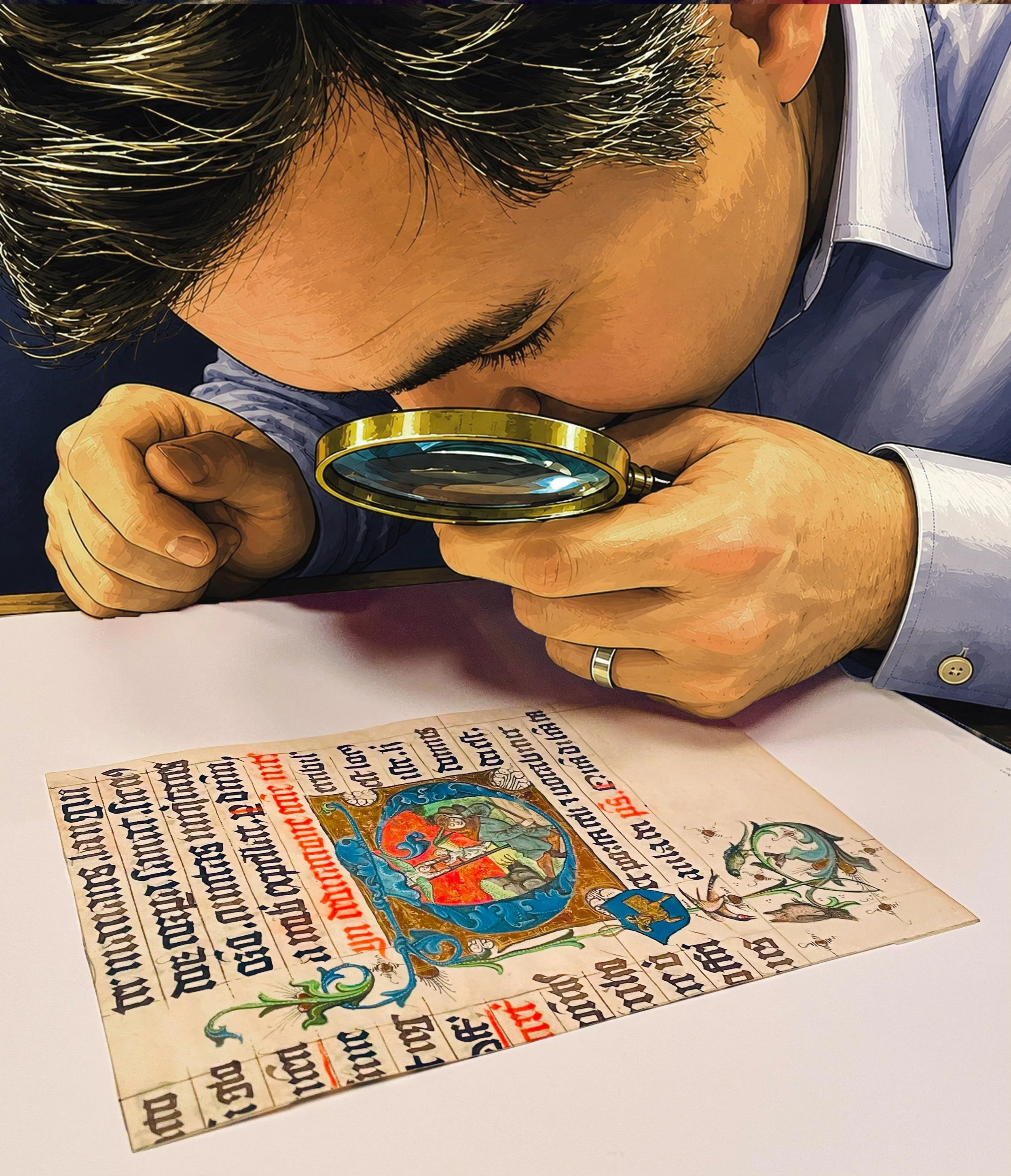
Collectors, scholars, museums and dealers often use different terms to describe medieval and Renaissance manuscript art. Illumination, miniature, historiated initial, manuscript cutting, decorated leaf and increasingly manuscript painting all appear regularly in catalogues and conversations. At first glance these terms may seem interchangeable. They are not necessarily the same, nor are they always equal in meaning.
Over time, terminology changes. Scholarship evolves. Collecting traditions shift. Certain words fall out of favor while others take on new meaning. Manuscript scholarship and connoisseurship itself spans many languages and centuries of study. Across languages such as French, German, Italian and English, similar challenges emerge: a multitude of terms may describe the same object, while subtle differences in language can shape meaning. The multiplicity of language reflects that richness.
In many respects, this complexity strengthens the field rather than weakens it. Medieval and Renaissance manuscript art occupies an unusual position between painting, books and a work of art that could be characterized as a works on paper. Even a manuscript can be seen as an object like a sculpture. Different terms can challenge context and interpretation, but they also reveal the many ways these objects have been understood and appreciated over centuries.
What is an illumination?
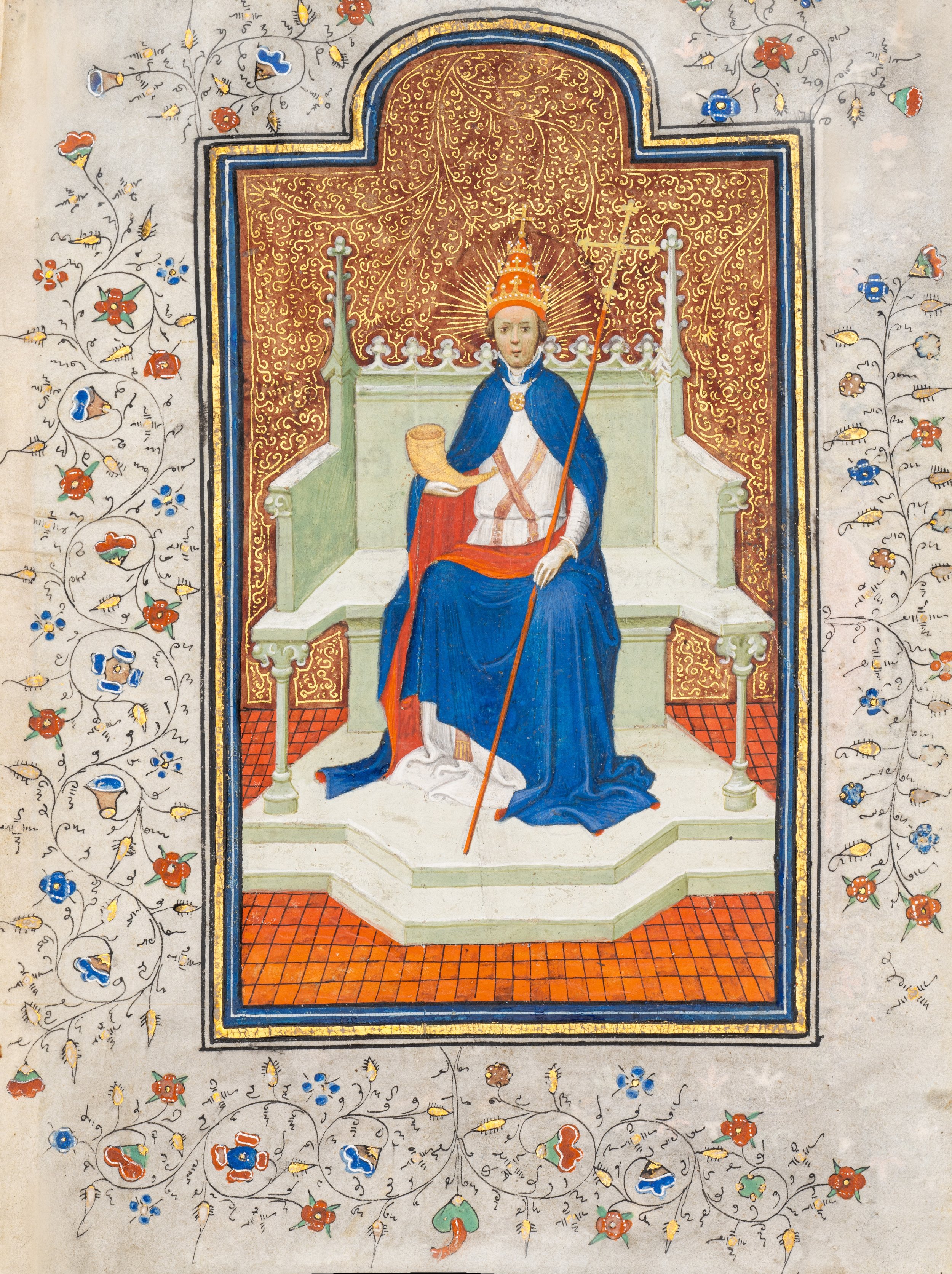
The term illumination broadly refers to decoration within a manuscript, particularly painted or gilded elements designed to enrich or enhance a text. The word derives from the Latin illuminare — “to illuminate” or “to light up” — a reference often associated with the brilliance of gold and color used to enliven medieval and Renaissance books.
In my very early days working with manuscripts, I was told that the idea behind illumination related closely to the French term enluminure — the sense that gold and precious pigments animate the page as light moves across its surface. Anyone who has handled illuminated manuscripts firsthand understands this effect immediately. Artists and craftsmen understood these visual effects too, carefully designing pages that would not simply be read, but experienced in a more transcendent way.
Illumination can encompass many forms: painted borders, decorated initials, gold and silver ornament, line decoration and larger painted scenes. Some manuscripts are modestly illuminated. Others transform nearly every folio into an intricate combination of text, decoration and painting.

What is a miniature?
One of the most common misunderstandings concerns the word miniature. The term does not originally refer to small size. Today the word miniature can sometimes create confusion for newer audiences, who understandably associate the term with scale rather than manuscript painting. Instead, it derives from the Latin minium, a red lead pigment used by medieval scribes and artists. Over time, the term came to describe painted scenes within manuscripts more broadly. The Italian miniatura remains closely tied to this tradition today. When traveling in Italy and explaining what I deal in, I often simply say “miniatura e manoscritti” — “miniatures and manuscripts” — and immediately people understand the world I work in.
Modern usage, however, has introduced additional layers of meaning. Today scholars and collectors often use miniature to describe a painted image preserved within an intact manuscript. A painting removed from a folio and appreciated independently as a single work of art, often matted and framed, is know as a miniature.
The history of collecting itself shaped this evolution in language. During earlier generations of manuscript collecting, particularly in the nineteenth and early twentieth centuries, manuscript paintings and fragments were frequently assembled into albums, cut and pasted onto blank leaves. One famous example that comes to mind is the Denniston Album, which Sir Kenneth Clark famously recalled as “Uncle Dennie’s scrapbook.” As collecting traditions evolved, so too did termin

What is an illuminated leaf?
A leaf refers to a single page from a manuscript. More technically, a leaf consists of two sides — the recto and verso — the front and back of a single sheet of parchment or paper. An illuminated leaf preserves text, decoration, and sometimes an image that enhances or relates to the written content, while maintaining part of the larger original structure of the book from which it came.
Does it have to have gold to be called “illuminated”? That is a good question. The answer is both yes and no.
Gold often shapes our modern understanding of illumination, particularly in luxury manuscripts where burnished gold catches light and enriches the page visually. Yet illumination encompasses more broadly the artistic enhancement of a manuscript through painted decoration, ornament, borders, initials and imagery. Some illuminated leaves contain extensive gilding. Others rely more heavily upon color, painted ornament or penwork decoration.
Detached leaves survive today for many reasons. Some manuscripts deteriorated over centuries of use. Others were dispersed intentionally during later collecting history. Individual leaves entered museums, libraries and private collections where they could be preserved, studied and appreciated independently.
Historiated initials and painted letters, what are they?
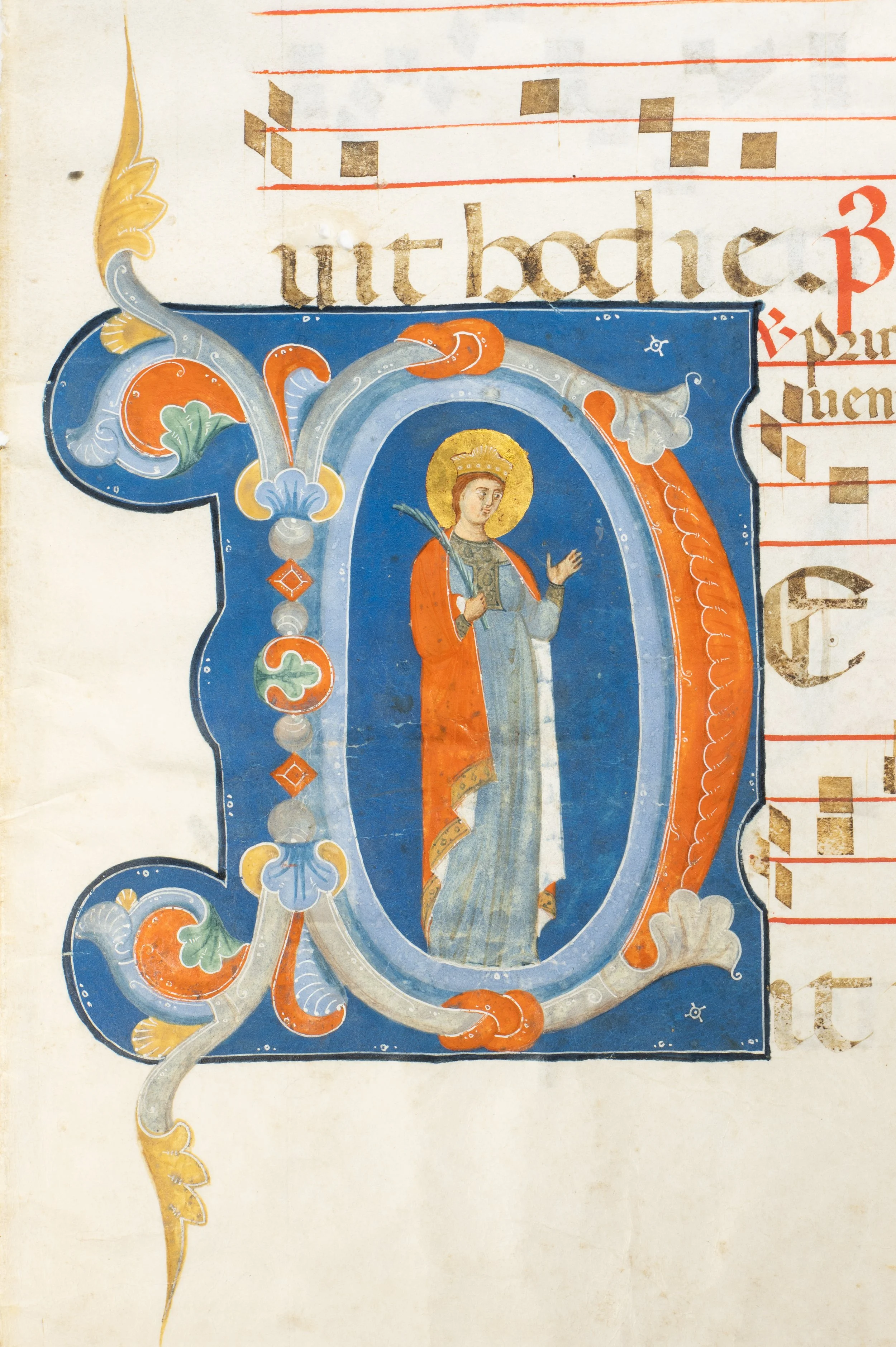
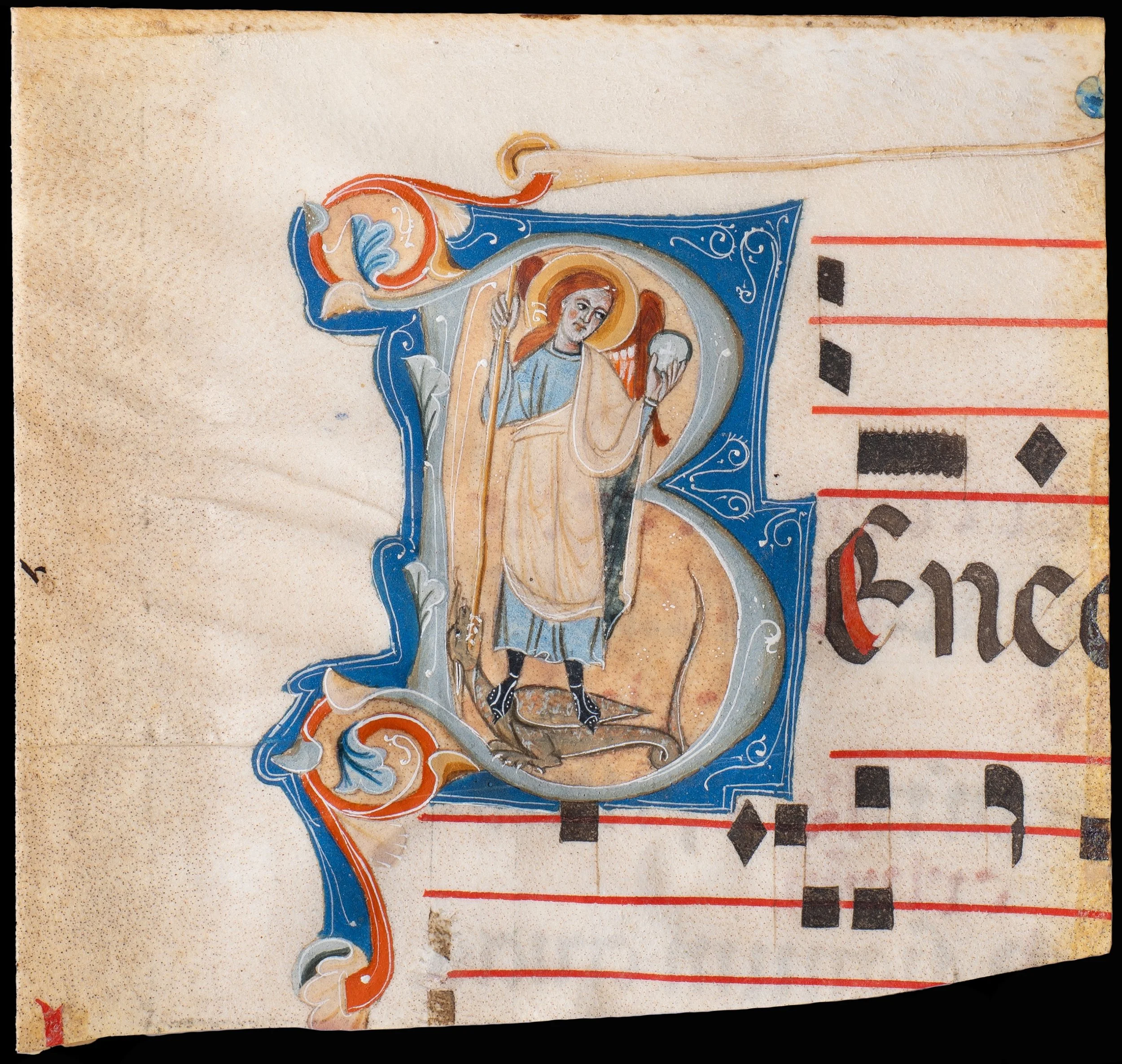
A historiated initial is a decorated letter containing narrative imagery or figures that introduces or relates directly to the text it begins. We frequently encounter them in Antiphonals, Graduals, Psalters and Bibles, where they often signal the beginning of an important chant, prayer or textual division.
Medieval and Renaissance artists transformed letters into pictorial spaces. Historiated initials helped identify the text, but they also informed the viewer visually about the subject that followed. Script alone was not the only language medieval readers understood. Visual language — imagery intertwined with memory, learning, devotion and lived experience — was equally important. Images served as powerful instructors, guiding understanding and enriching meaning alongside the written word. Some of the most beautiful and important paintings of the Middle Ages and Renaissance survive today as historiated initials. They are not simply decorative letters.
Cuttings, leaves, and changing language
Terminology evolves alongside scholarship and collecting practice. One example is the historical use of the term cuttings. Throughout much of the nineteenth and twentieth centuries, antiquarian dealers and curators frequently used phrases such as illuminated cuttings or miniature cuttings to describe manuscript material removed from larger books.
Over the years exhibiting publicly, I have occasionally encountered visitors asking, somewhat cautiously, “Did you cut these out?” It is a fair question, particularly for audiences encountering manuscript material for the first time. The answer, of course, is no. I am simply a custodian — studying these works, trying to better understand them, preserving what can be preserved, and ultimately helping connect them with new collectors and institutions who will continue their stewardship into the future.
Today the term cuttings appears somewhat less frequently. Partly this reflects changing attitudes toward manuscript preservation and collecting history. Modern scholarship increasingly considers how and why manuscripts became dispersed and how language itself shapes our understanding of those histories. Terms such as detached leaf, single leaf, miniature on parchment or excised miniature may emphasize different aspects of an object’s identity and history. No terminology is entirely neutral. Language shapes perception, and perception shapes collecting.

Manuscript painting, is this the correct term?
IIncreasingly, I find myself drawn to the term manuscript painting. In many respects, it encompasses much of what we have discussed above. It is simple and direct — paintings within manuscripts. That simplicity has value and perhaps deserves wider use.
The phrase places these objects more directly within the broader history of painting itself. Medieval and Renaissance illuminators were painters. They were artists, whether producing modest devotional manuscripts or some of the most ambitious artistic creations of their age. The term manuscript painting also acknowledges something collectors increasingly recognize: these works deserve to be understood not solely as fragments of books, but also as paintings in their own right.
Collecting traditions and changing perceptions continue to shape how manuscript material is understood and appreciated. Readers interested in exploring that history further may also enjoy my previous blog post: Miniatures as “Monuments of a Lost Art” — The Origins and Enduring Appeal of Illuminated Cuttings and Leaves
Collectors interested in acquiring original examples of manuscript painting, illuminated miniatures, and medieval manuscripts may wish to explore our current selection of illuminated manuscripts, miniatures, and manuscript leaves available for purchase.